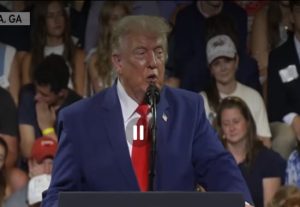
Tensions over the Middle East came to the White House this week during a Cabinet meeting when President Donald Trump appeared to threaten the Middle East country of Oman. Critics say his remarks are evidence of a Trump foreign policy that is becoming bolder every day.
The President seemed to warn Oman that it would face the full force of the U.S. military if it was attempting to assert control over the Strait of Hormuz with Iran.
“Oman will behave like everybody else, or we have to blow them up,” Trump said at the Cabinet meeting.
Some experts have called the President’s comments out of the blue as a cause of concern. After all, Oman has had good relations with the U.S. for decades, and the casual manner in which it was said certainly doesn’t seem appropriate.
Trump critics are saying that this moment is further evidence of Trump’s belligerent foreign policy in his second term that isn’t limited to countries that may be at war with the U.S.
What Is the Geopolitical Importance of Oman?
So why did this comment cause such an uproar? It helps to understand Oman’s geopolitical importance.
The small country is located near a major shipping lane called the Strait of Hormuz. Roughly one-fifth of all of the world’s oil shipments pass through this narrow waterway that connects the Persian Gulf with the rest of the world. Any interruptions to oil shipments via this route can result in soaring oil prices and economic chaos for the whole world.
Unlike a number of countries in the Middle East, Oman has often played a conciliatory role with other Middle East countries and the West. It has a long history of being in good relations with both Iran and Western countries, and that helps to make it a neutral party in the region.
Critics said Trump’s remarks seemed like he was threatening to blow up Oman, a country that has served as a peacekeeper in the region for years rather than as a hostile regime.
Trump Has A Growing List of Foreign Military Targets
This Trump threatens Oman during HIGH STAKES Cabinet meeting comment has raised additional questions about Trump’s foreign policy record overall.
When running for President, Trump made repeated promises to avoid “forever wars,” saying previous U.S. Presidents had been too involved in other conflicts around the world. However, opponents say he’s been much more aggressive when in power.
Trump’s first four years in the White House had him using extremely hostile language toward foreign countries that threatened them with military strikes and leaving it in some cases whether the U.S. would attack another country militarily in response to an attack by that country’s military.
Here are a few countries that may have been in Trump’s sights in some form. Some of them have been the targets of small-scale U.S. military strikes aimed at terrorist groups, while other countries’ leaders have been threatened directly. In other instances, the U.S. military has not ruled out an attack on a country that has attacked the U.S. But Trump’s supporters say his unpredictability was by design.
The “Madman Theory” Trump Is Using
Trump’s behavior on foreign policy has been compared before to the “madman theory,” according to various political experts.
The theory is built on the idea that being unpredictable as a world leader can lead to better outcomes for you by making your enemy wonder where you might go in a tense moment.
In Trump’s case, supporters see him making bold threats in order to scare rival governments out of making concessions with force.
The idea being that if an enemy knows that Trump might do an extreme move, then he may win that conflict without even having to escalate.
The counter-argument to this idea is that making threats, particularly to allies or neutral countries, can destabilize relations and lead to accidental escalation.
Those comments in Oman are sure to become another part of that conversation.
The Strait of Hormuz Is a High-Stakes Area for Geopolitics
This was particularly true considering that tensions regarding the Strait of Hormuz are still high.
There have been geopolitical clashes over the area for a long time between Iran, Middle Eastern nations, and Western militaries.
Often, a military comment on Hormuz, even one that wasn’t intended to be a threat, can spook the markets for a short time given that the area is still so vital to oil exports around the world.
It’s possible that a war on the sea could end up going badly for the world as a whole.
Oil prices could skyrocket.
Supply chains could be disrupted.
And global diplomatic tensions could blow out of control.
So it makes sense that even a seemingly offhand comment from a US president could generate some immediate headlines.
The Comments Were Seen as “Alarming”
The part of the statement that some found especially striking wasn’t necessarily the words Trump actually said but how he said them.
Trump made the remarks conversationally during a Cabinet session.
That has led some to believe that military rhetoric has become a normal part of Trump’s politics.
Many foreign policy experts argue that words from presidents matter when it comes to war, even if it’s a casual comment.
It could have a damaging effect on diplomatic relationships, markets, or geopolitical views.
For that reason, Trump’s remarks about Oman have been discussed heavily already after the Cabinet session.
Thoughts on Trump Threatening Oman
The whole thing on Trump threatens Oman during HIGH-STAKES Cabinet meeting speaks to a bigger debate that has come up during Trump’s time in the political arena:
Is it a good idea for Trump to use aggressive rhetoric or will it cause the world more chaos?
Supporters say that Trump is using it as a way to pressure other governments to get what the US wants for them.
Critics see it as a part of a pattern of more confrontational rhetoric, which could end up hurting diplomatic relations and creating more tension in the world.
Regardless, the comments managed to put foreign policy back at the forefront of the conversation.
And with the ongoing tensions regarding the Strait of Hormuz, it’s unlikely that what Trump said about Oman will be forgotten anytime soon.